
Every parent knows this moment: your toddler spots the staircase, their eyes light up, and suddenly they’re sprint-crawling towards it like a tiny adrenaline junkie on a mission. It’s both adorable and terrifying, and you’re not alone. According to the Royal Children’s Hospital Melbourne, more than 8,000 children present to emergency departments every year due to fall-related injuries, with staircase incidents constituting a significant portion. That’s a staggering number. And it highlights a reality most families don’t expect until it’s too late: standard staircases aren’t designed for toddler behaviour.
Not the cautious, sensible steps adults take.
Not the measured walking teenagers manage.
But the unpredictable and often fearless explorations of toddlers.
So let’s fix that.
Let’s turn your staircase into a zone where your toddler can move, learn, explore safely.
This guide digs deep into why toddler-safe stair design matters, what safety upgrades make the biggest difference, and how you can implement them in a practical, realistic way that suits modern Melbourne homes.
Let’s dive in!
Why Should You Upgrade Your Staircase for a Toddler?
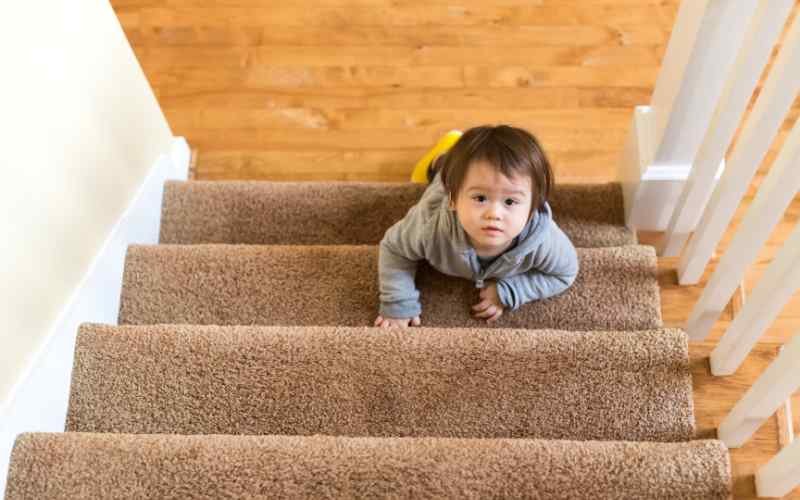
Toddlers don’t have fully developed depth perception
They can’t accurately judge step height, distance, or speed, a recipe for slips and tumbles.
Standard stair designs are made for adults, not children
Traditional handrails are too high.
Baluster gaps are often wide enough for limbs or sometimes heads to get stuck.
And stair surfaces can be slippery even for adults.
First-time parents underestimate staircase hazards
It’s not just falls. It’s:
- fingers getting caught between balusters
- toddlers slipping on socks
- tripping over clutter
- poor lighting creating shadow gaps
- unstable baby gates attached incorrectly
The risk isn’t temporary – it’s daily
Toddlers interact with stairs multiple times a day once they’re mobile. Every trip up or down is a safety opportunity (or hazard).
Small upgrades can prevent major injuries
You don’t need to remodel the entire staircase.
A few focused, strategic improvements drastically increase safety.
Safety Upgrades for Staircases When You Have a Toddler
We’ll break down each one by explaining the why, the what, and the how that’s backed by expert insight and practical, Melbourne-relevant solutions.
Install High-Quality Non-Slip Stair Treads
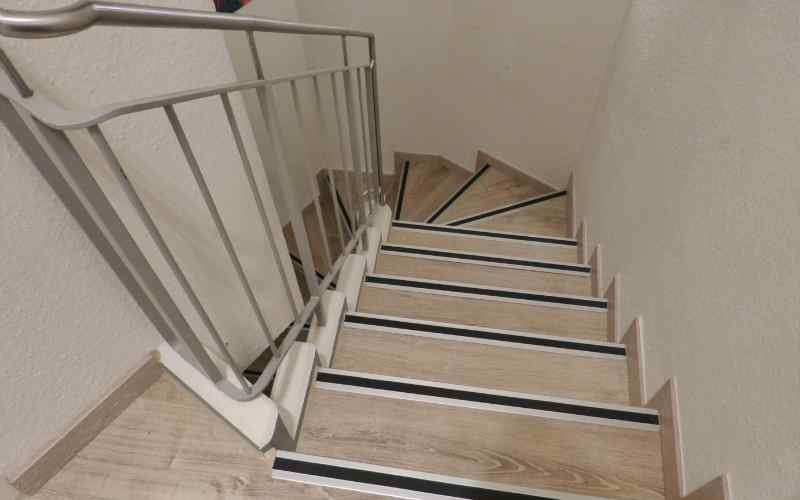
If there’s one upgrade that delivers immediate safety improvement, it’s non-slip treads. Wooden staircases, especially polished timber, are notoriously slippery for toddlers wearing socks or soft shoes.
Why It Matters
A study found that stair slips account for nearly 20% of toddler fall incidents, and surface friction plays a significant role. Kids don’t walk with slow, steady footsteps, they shuffle, hop, and sometimes try to climb on all fours. That’s why better grip is essential.
What to Install
- High-traction rubber treads
- Carpet-inlay treads
- Textured adhesive strips
- Full-length stair runners
How to Get It Right
- Choose treads with at least 0.72 slip resistance (wet pendulum test).
- Avoid overly plush carpets, toddlers can trip on them.
- Ensure each tread is installed edge-to-edge so toddlers can’t peel them up.
- Consider professional installation for a seamless finish.
If you’re updating or replacing your staircase, we can integrate textured or GripSeal finishes directly into each step, a perfect long-term solution.
Add Lower-Height Child Handrails for Extra Stability
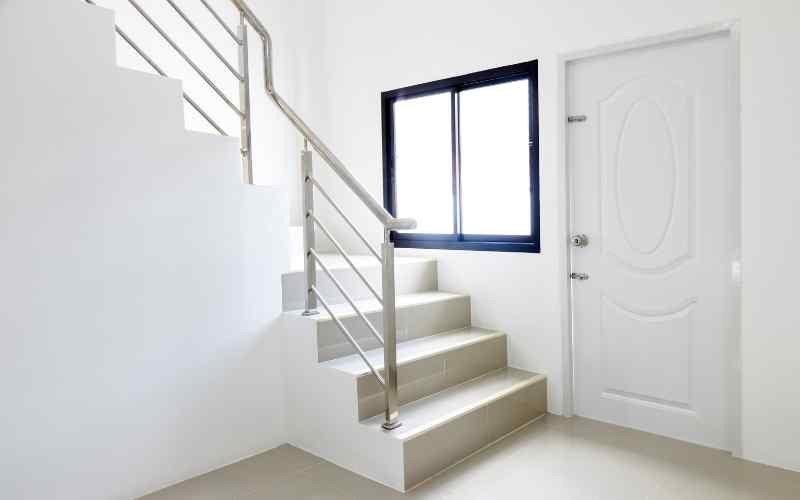
Most handrails in Australian homes sit around 900–1000mm high, designed exclusively for adults. That’s impossible for toddlers to reach, meaning they rely completely on you or the wall.
Why It Matters
Toddlers often begin using stairs before they’ve learned proper balance. A dedicated child handrail gives them a secure, reachable anchor point.
What to Install
- A secondary child-height handrail (installed at 550–650mm)
- Rounded profiles to avoid finger pinching
- Smooth, continuous rails with no gaps or sharp transitions
How to Install Safely
- Ensure the lower handrail aligns with step movement direction.
- Use metal brackets fixed into studs, toddlers pull HARD when scared.
- Avoid wide gaps between the adult and child rails to prevent climbing.
- Make sure the ends curve back to the wall to prevent clothing catching.
This is one of the most underrated staircase upgrades, but one that dramatically reduces falls.
At The Top And Bottom Of The Stairs, Install Baby Gates
Many parents install a baby gate at the top of the stairs and call it a day. But toddlers climb, and that means you also need a secure gate at the bottom.
Why It Matters
- Toddlers may climb upward unsupervised, leading to backward falls.
- A top-only gate doesn’t stop upward access.
- Stair-related climbing injuries peak between 18–36 months, when toddlers are most curious.
What Type of Gate to Install
Always choose hardware-mounted (screw-in) gates for staircases. Pressure-mounted gates are unsafe for top-of-stair placement, they can dislodge under weight.
Your best options:
- Metal hardware-mounted gate
- Gate with auto-close mechanism
- Gate with bottom rail flush to the floor (no trip hazard)
- Retractable mesh gates for narrow or aesthetic spaces
How to Install Correctly
- Place gates as close to the first riser as possible.
- Ensure it opens away from the staircase, not towards it.
- Avoid gates with large horizontal bars, toddlers use them as ladders.
This single upgrade can prevent the most severe staircase accidents.
Secure Baluster Gaps to Protect Curious Little Bodies
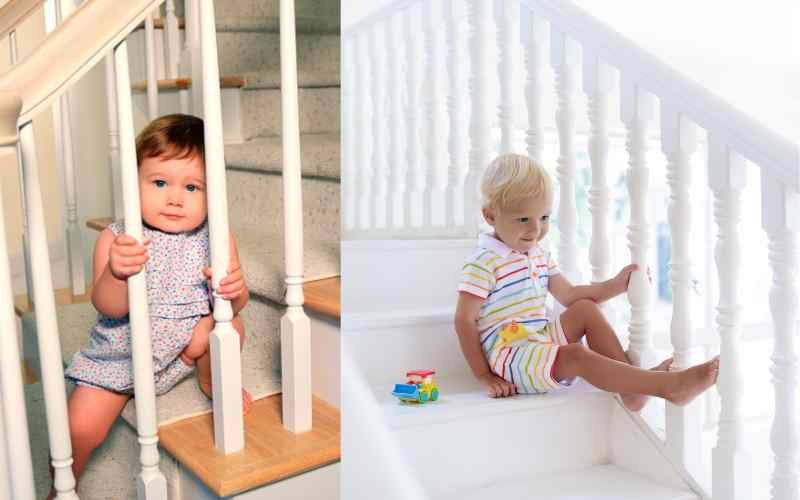
Balusters (vertical railing posts) are often spaced 110–120mm apart. That’s legal — but just wide enough for a toddler’s head, hand, or foot to slip through.
Why It Matters
In homes with open balustrades, toddlers can attempt to:
- squeeze through
- toss toys
- climb
- poke limbs through gaps
- use balusters as footholds
A study by Kidsafe Australia found that entrapment injuries make up nearly 30% of non-fall staircase incidents.
What to Use
- Clear acrylic safety panels
- Temporary vertical tension guards
- Mesh baluster covers
- Custom timber or glass infill panels
How to Install Safely
- Avoid horizontal slats, toddlers climb them.
- Choose solid or tensioned infills, not loosely tied mesh.
- Ensure panels are impact-rated (preferably 4mm+ acrylic).
- If you’re in Melbourne, ensure the installation complies with AS 1170.1 load requirements.
This upgrade is crucial for open, modern, or floating stair designs.
Improve Staircase Lighting and Declutter the Step Area
Toddlers react to shadows, changes in depth perception, and visual distractions. A poorly lit staircase increases hesitation, tripping, and missteps.
Why It Matters
- Shadows mimic “missing” steps for toddlers.
- Dim lighting hides toys, socks, or objects left on steps.
- Toddlers rely heavily on vision for balance.
Lighting Improvements to Consider
- LED strip lights along the skirting
- Motion-sensor step lights
- Soft amber lighting (not harsh white)
- Under-tread lighting for floating stairs
- High-CRI bulbs for accurate depth visibility
Decluttering Tips That Actually Work
- Add a stair basket to collect items before they pile up.
- Use a “no toys near stairs” rule.
- Avoid decorative plants, sculptures, or floor lamps near the staircase base.
- Keep socks and soft-soled shoes out of the staircase zone entirely.
Small changes here dramatically reduce everyday hazards.
Upgrade to Childsafe Staircase
Get a Free QuoteBonus: Other Helpful Upgrades for Toddlers
Not essential, but incredibly effective:
- Edge guards for nosing protection
- Anti-slip varnish for existing timber
- Soft-close hinges on stairwell doors
- High-contrast step markings to improve visual clarity
These work especially well for multi-storey Melbourne homes with busy family traffic.
Toddler Safety Is a Journey, Not a One-Time Fix
Upgrading your staircase doesn’t mean compromising style. In fact, modern family homes across Melbourne are integrating safety and design more seamlessly than ever. Whether you’re planning a new build, updating an old home, or working with professional staircase manufacturers like Stairworx, these safety upgrades help future-proof your home.
From installing non-slip treads to adding child-height handrails, securing balusters with reliable options seen in many stair balustrade projects in Sunshine, improving lighting, and using high-quality gates, each improvement reduces risk and increases your toddler’s independence.
It’s simple:
A safer staircase means a safer childhood.
And that’s worth every step.
Related: Building Safe Stairs